
Last updated: April 2026
If you only read four money books this year, make it these. I went through dozens of personal finance titles — classics, new releases, and everything hyped on TikTok — and narrowed it down to the books that actually change how you think about money, not just how you budget it.
Whether you’re paying off debt, building your first emergency fund, or trying to figure out how investing actually works, there’s a book here for you. I ranked them by how fast they deliver results for someone starting from zero.
The 4 Best Personal Finance Books of 2026 — Compared
Here’s a side-by-side look at each book so you can pick the right one for where you are right now. Tap any “Buy on Amazon” button to grab your copy.

1. I Will Teach You to Be Rich — Ramit Sethi
Best for: Anyone who wants a complete money system they can set up once and forget about.
This is the book I recommend first and most often. Ramit doesn’t lecture you about cutting lattes. Instead, he gives you a 6-week action plan to automate your finances — bills, savings, investments — so your money works without you thinking about it every day.
What makes it stand out is how practical it is. Every chapter ends with specific things to do that week. By the time you finish, your accounts are set up, your investments are running, and you have a system for spending on what you love without guilt.
Key takeaway: Automate everything. Set up your accounts so money flows to the right places automatically, then focus your energy on earning more — not obsessing over every purchase.
2. The Psychology of Money — Morgan Housel
Best for: People who know what to do with money but keep making emotional decisions anyway.
This isn’t a how-to book. It’s a why-you-do-what-you-do book. Morgan Housel breaks down 19 stories about how people think about money — and why two people with the same income can end up in completely different financial situations based purely on their mindset.
I read this after I already had a budget and investment accounts running, and it still shifted how I think about wealth. The chapter on compounding alone is worth the entire book.
Key takeaway: Getting wealthy and staying wealthy are two completely different skills. Patience and humility beat strategy almost every time.
3. The Total Money Makeover — Dave Ramsey
Best for: People drowning in debt who need a clear, aggressive plan to get out.
If you have credit card debt, a car payment, and student loans stacking up, this is your starting point. Dave Ramsey’s debt snowball method is simple and it works — not because the math is perfect, but because the psychology of quick wins keeps you going.
Fair warning: his investment advice is dated, and the “no credit cards ever” rule doesn’t work for everyone. But for getting out of debt specifically, this book has helped millions of people for a reason.
Key takeaway: Attack your smallest debt first, get the quick win, roll that payment into the next one. Momentum beats optimization when you’re in survival mode.
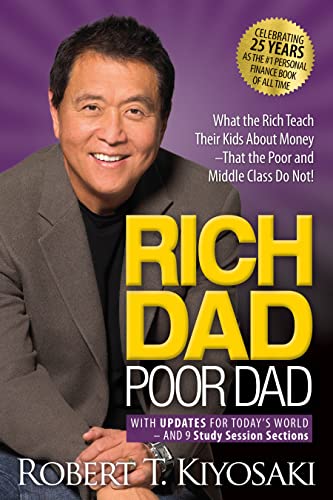
4. Rich Dad Poor Dad — Robert Kiyosaki
Best for: People stuck in the “work hard, save, retire” mindset who need a perspective shift on building wealth.
This is not a step-by-step book. It’s a mindset shift. Kiyosaki’s core idea — that the rich buy assets and the poor buy liabilities they think are assets — rewires how you look at every financial decision. Your house isn’t an asset. Your side business is.
The specific advice in this book is thin, and some of it is controversial. But the mental framework it gives you about assets vs. liabilities and making money work for you is foundational. Read it for the thinking, not the tactics.
Key takeaway: Stop trading time for money. Build or buy things that generate income whether you show up or not.
Which Book Should You Read First?
- In debt right now? → Start with The Total Money Makeover
- Debt-free but no system? → Start with I Will Teach You to Be Rich
- System running but making bad decisions? → Read The Psychology of Money
- Feeling stuck in the 9-to-5 grind? → Read Rich Dad Poor Dad
Honestly, you’ll probably end up reading all four eventually. But starting with the one that matches where you are right now means you’ll actually take action instead of just highlighting quotes.
📚 Ready to grab your copy?
Scroll back up to the comparison table and tap “Buy on Amazon” — prices update in real time so you always get the best deal.
Bonus: How to Actually Finish a Personal Finance Book
Most people buy money books and never finish them. Here’s what works for me:
- Read one at a time. Don’t stack three on your nightstand. Pick one, finish it, act on it.
- Do the exercises. If the book says “open a savings account this week,” do it before you read the next chapter.
- Pair it with a money app. I use AI budgeting tools alongside whatever book I’m reading — it makes the lessons stick faster when you can see your numbers in real time.
The best personal finance book is the one you actually finish and act on. So pick one from the table above, order it today, and commit to finishing it this month. Your future self will thank you.
Affiliate Disclosure: MikiMoney AI is a participant in the Amazon Associates Program, an affiliate advertising program. When you buy through links on this page, we may earn a small commission at no extra cost to you. We only recommend books we’ve actually read and believe in. Full disclosure.